Stained Glass - Table of Contents.................. Illustrated ART GLASS Dictionary..................Illustrated Dictionaries - Table of Contents
Illustrated Stained Glass Dictionary
|
Art glass Decorative glass
which includes stained, beveled, fused, blown, etched,
leaded and cut.
|
|||||||||||||||
| . | |||||||||||||||
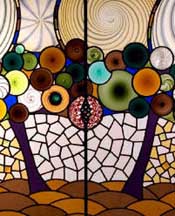
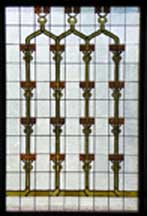 Arts & Crafts style |
|||||||||||||||
|
See also: Enamels (below)
|
|||||||||||||||
| . | |||||||||||||||
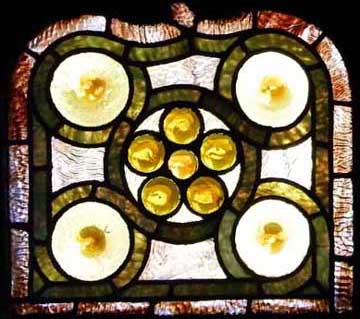
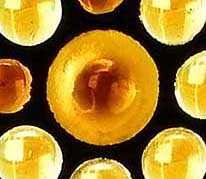 Bull's-eye, bullseye A thick, circular piece of glass set, as in a roof or ship's deck, to admit light. The glass boss at the centre of a sheet of blown glass See also rondel below.
|
|||||||||||||||
| . | |||||||||||||||
|
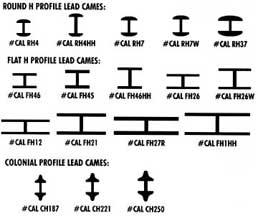
Came, lead came A slender, grooved lead bar used to hold together the panes in stained glass or lattice windows. Extruded pure lead that is milled to specific dimensions as either "U" or "H" shaped strips, then cut and formed to accept and hold the stained glass shape. It's available in spools or precut lengths of about 6 feet. Later, zinc, copper, brass, etc. were substituted for the lead. Leaded glass: Glass panels made by combining multiple small pieces of glass, which may be stained, textured or beveled, with cames. Usually, solder is
applied on both sides of the came where pieces meet. Came:
|
|||||||||||||||
| . | |||||||||||||||
|
A design or study drawn of the full size, to serve as a model for transferring or copying - used in the making of stained glass windows, mosaics, tapestries, fresco paintings, etc. The line drawing for a work of glass with all cut lines shown. Individual pieces may be numbered and color shadings indicated. A second copy is cut for pattern pieces. |
|||||||||||||||
| . | |||||||||||||||
|
Cathedral
Glass Domestic stained
glass today. Some of the types of cathedral glass:
|
|||||||||||||||
| . | |||||||||||||||
|
|
|||||||||||||||
| . | |||||||||||||||
| Cement A cementing compound is brushed under the edge of all the lead to fill in any space between the lead and the glass. The front side of the window is cemented first and allowed to cure; then the backside is cemented. |
|||||||||||||||
| . | |||||||||||||||
| Crackle
glass Created by dipping a molten cylinder of glass into water which causes the exterior of the glass to crack but the molten interior holds together. The cylinder is sliced down the side, flattened and the crackle textures are rolled into glass. This is an antique glass (glass blown) VS. cathedral glass (above) |
|||||||||||||||
| . | |||||||||||||||
| Dalle-de-verre -
See Faceted glass (below) |
|||||||||||||||
| / | |||||||||||||||
|
Drapery
glass
|
|||||||||||||||
| . | |||||||||||||||
|
There are four primary ways to color glass: Enamels are soft powdered colored glass that is mixed with a medium and painted onto the glass with a brush. When the medium is dry, the glass is placed in a kiln for firing. The Romans mixed the powdered glass with oil until it has the consistency of paint. In the Gothic era, black enamel was made from ground glass plus iron filings. The Romans also cold-painted, i.e., did not refire the glass after it was enameled. See Black enamel paint (above)
|
|||||||||||||||
| . | |||||||||||||||
| Etching Method of removing one layer of color from flashed glass in a hydrofluoric acid bath. The glass to be etched is exposed via cutting a stencil from a completely covered piece of glass. Hydrofluoric acid is the only liquid material that will dissolve silica - the main ingredient in glass. The length of exposure to this corrosive acid will determine how far the acid will eat into the glass. |
|||||||||||||||
| . | |||||||||||||||
|
|
|||||||||||||||
| . | |||||||||||||||
| Favrile fuh v REEL Favrile glass is a type of iridescent art glass designed by Louis Comfort Tiffany. It was patented in 1894 and first produced in 1896. It differs from most iridescent glasses because the color is ingrained in the glass itself, as well as having distinctive coloring. Favrile glass was used in Tiffany's stained-glass windows. At the 1900 Paris Exposition, Favrile glass won the grand prize in the exposition and is appointed a Chevalier in the Legion of Honor. |
|||||||||||||||
|
Flashed glass is one sheet of glass made of two layers of color. Any color can be flashed on top of another. Made by dipping a ball of semi-molten (below) white ("colorless") glass into molten colored glass which, when blown (below) and flattened, results in a less intense color because it will be white on one side and colored on the other. In the Gothic era, natural pot-metal (above) glass colored blue or red was too dark to transmit much light, so the medieval glazier (above) hit on the technique of flashing. A semi-molten cylinder of colorless ("white") glass was dipped into a pot of red glass so that the red glass formed a thin coating. This allowed a variety in the depth of red, ranging from very dark and almost opaque (below), through ruby red to pale, and sometimes streaky red that was often used for thin border pieces. The red of double-layered glass could be engraved or scraped to show colorless glass underneath. The original color thus revealed could be either left in its original state or painted. This affected the size of individual pieces of glass, which now became much larger and less geometrical. Only one section was now needed for a face, its hair, and the surrounding halo, instead of the previous three. In the late medieval glass this method was often employed to add rich patterns to the robes of saints. You can easily tell a piece of flashed glass by scratching at a corner with a glass cutter or just chipping a small bit away. The underlying color will show through. A great deal more light can pass through a window containing grisaille and/or flashed glass, which means that dark interiors can be illuminated much more efficiently.
|
|||||||||||||||
| . | |||||||||||||||
|
|
|||||||||||||||
| . | |||||||||||||||
| Fusing
The technique of controlled melting of combinations of glass in layers using a kiln. |
|||||||||||||||
| . | |||||||||||||||
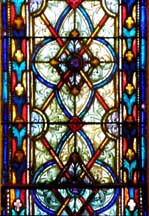 Geometric Usually stenciled
|
|||||||||||||||
|
Glass
Glass
is
commonly made by combining materials such as silica (sand) -
the main ingredient - , potash, and lead oxide at a high
temperature in order to allow the materials to melt and fuse
together. When cooled rapidly, the substance becomes rigid.
3 basic ways of forming glass:
|
|||||||||||||||
| . | |||||||||||||||
|
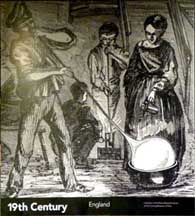
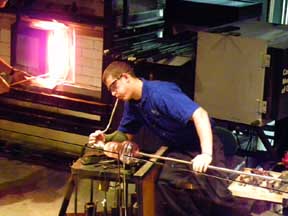
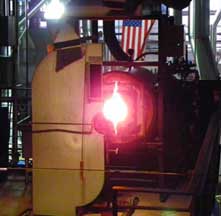
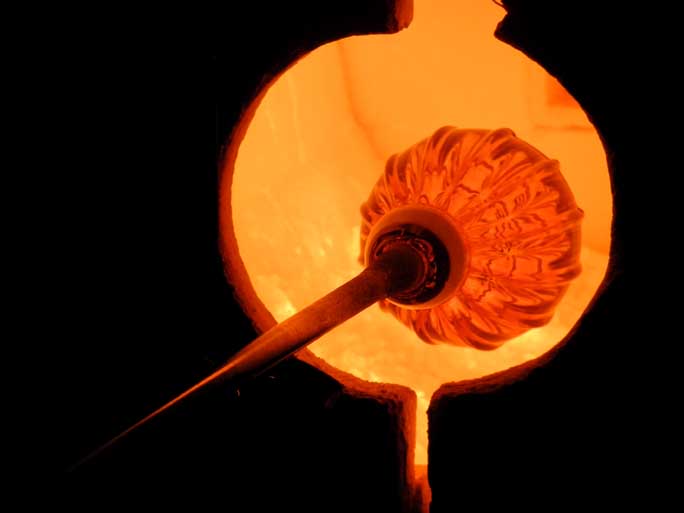
The art of shaping a mass of glass that has been softened by heat by blowing air into it through a tube. A glass forming technique that involves inflating the molten glass into a bubble, or parison, with the aid of the blowpipe, or blow tube. A person who blows glass is called a glassblower, glassmith, or gaffer. His reheating furnace is called a "glory hole" (below). The discovery of glassblowing was made somewhere around the year 50 BC by the Romans. Most early stained glass was made by mouth-blowing long cylinders of molten glass, which were partly cooled, had the ends removed, were cut open, reheated and flattened. See pot metal below. |
|||||||||||||||
| . | |||||||||||||||
| Glazier
One that cuts and fits glass |
|||||||||||||||
| . | |||||||||||||||
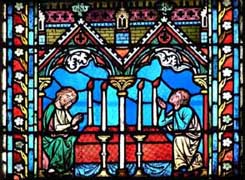 Gothic and Gothic Revival |
|||||||||||||||
| .. | |||||||||||||||
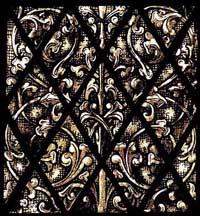
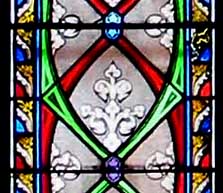
Grisaille, grissaille (gri ZEYE, ZAIL) Window or panel or ornamental designs, composed almost exclusively of uncolored glass in which the designs are created by the black leads alone or with the addition of paint and silver stain (below). Monochrome painting on glass using a mixture of ground glass, ground lead and other substances. The word is derived from the French "grisailler," meaning to paint gray. Decorative work or illustrative scenes rendered mainly in shades of gray (or muted brown). Grisaille is the use of black enamel to create patterns on clear glass that was then refired. Grisaille is a lacy (foliate) pattern painted on light glass with vitrifiable paint (able to be fired and turned into glass) and fired. Grisaille usually include either foliate (oak, maple, rose, etc.) or geometric (usually strapwork) patterns. Strips of color were sometimes added to the monochrome of grisaille. Toward
the
end of the thirteenth century a desire for more
illumination surfaced with an increase in
nonfigurative windows and concentric patterning that
incorporated more transparent glass. Grisaille glazing was
first favored by the Cistercian Order under St.
Bernard, who found that figurative windows distracted
monks from religious responsibilities. Grisaille pattern in the nineteenth century was most commonly achieved through the use of tin stencils (illustration). Studio catalogues often included suggested figural or symbolic inserts. In the nineteenth century revival, combinations of grisaille and figural glass were as important as they were in the Middle Ages. For many congregations opposed to imagery, such as Baptists, non-figural grisaille remained the glazing choice throughout the nineteenth century. Grisaille windows were often installed as temporary measures, to be used only until a church could afford stained glass or until stained glass windows and memorials were donated. Grisaille is used on quarry (below) glazing.
See also: Roundels below ..... Grisaille painting
|
|||||||||||||||
| . | |||||||||||||||
Hot glass Glass worked in its molten state directly from the furnace, usually in three dimensions. The term is used in contrast to “stained glass,” which is usually flat-worked cold |
|||||||||||||||
|
|||||||||||||||
| . | |||||||||||||||
|
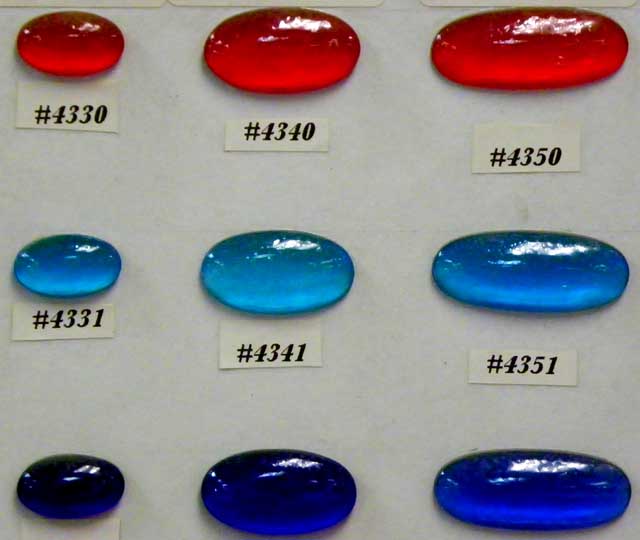
Piece of hot glass that is press-molded into a jewel like shape. Cathedral or opalescent glass that has been pressed into steel molds and then polished for consistent shapes and sizes. Faceted round, navettes and square shapes; smooth ovals and rounds, raised swirls and "iceberg" shapes are just a few of the types of jewels available. Both John LaFarge and Louis Comfort Tiffany used irregular nuggets, chipped and fractured with a hammer - also called jewels
|
|||||||||||||||
| . | |||||||||||||||
| Kiln A chamber made of firebrick in which to bend or fuse glass. Size ranges from small tabletop units to 3' x 4' bed, floor models. They can be electric or gas heated. |
|||||||||||||||
| . | |||||||||||||||
|
The
modern
method of producing stained glass is by ladling molten glass
onto a table and then into a roller. See the process in
photos with captions: Kokomo
Opalescent Glass: Tour the Factory
(online 2010) See also: Tiffany and Kokomo Opalescent Glass
|
|||||||||||||||
| . | |||||||||||||||
|
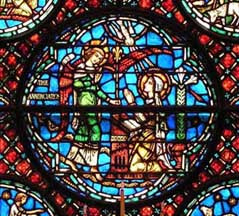
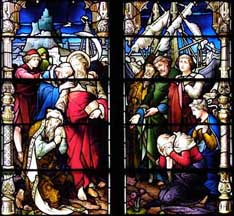
In Gothic churches, medallions in nave windows depicted scenes from the Old and New Testaments. Roundels and round medallions sometimes used interchangeably. Example
|
|||||||||||||||
| . | |||||||||||||||
|
Glass in a melted state after the ingredients have been fused at a high temperature, liquefying the batch. It is then allowed to cool until it is plastic and shapeable. It is sticky and will adhere to an iron blow pipe (above) or other glass object already heat-softened.
|
|||||||||||||||
| .. | |||||||||||||||
|
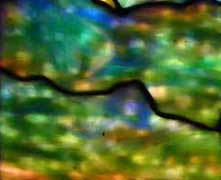
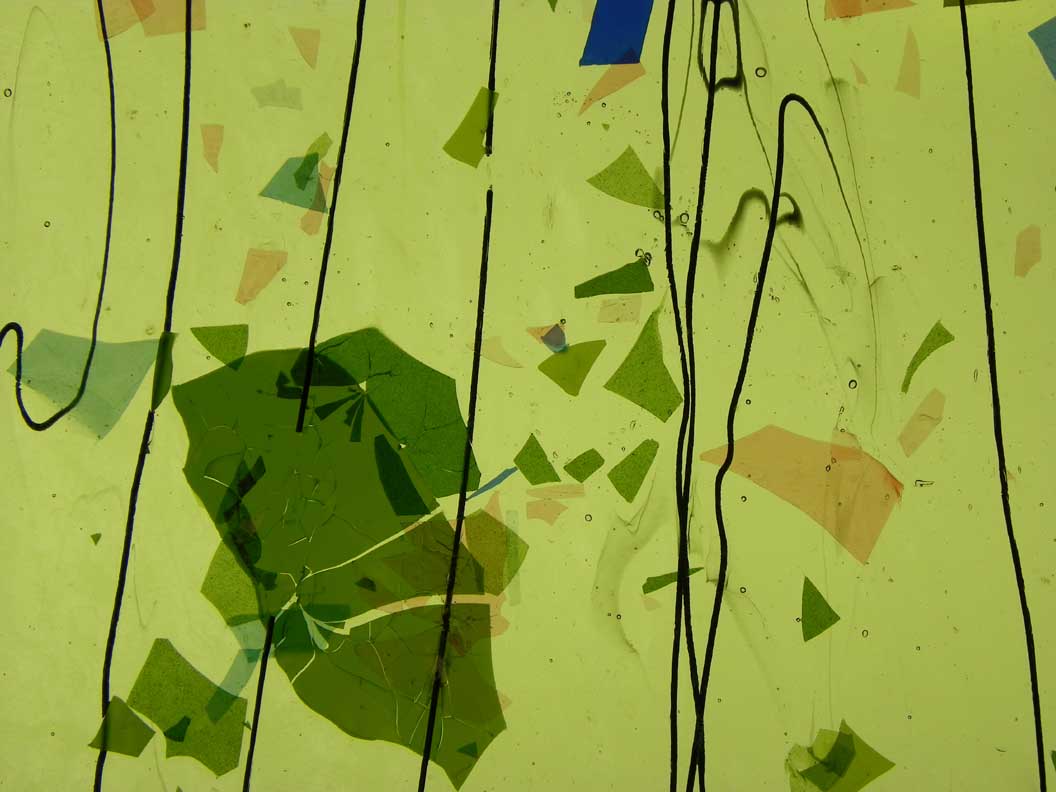
Glass with areas of opaque and translucent spots of color. May be one, two or three colors per sheet. Well suited to organic and three-dimensional imagery. Dappled: having spots or patches of color Patterned with spots or blotches. Appearance of uneven color Spots of lighter and deeper shades Glass that has variation in coloration in the form of small spots, some of which run together. Mottle or mottling is the appearance of uneven spots on plants or the skin of animals. In plants, mottling usually consists of yellowish spots on plants, and is usually a symptom of disease or malnutrition Traditional mottled glasses impart an orangish gray cast to the glass. CATSPAW above RING MOTTLE GLASS An opalescent glass in which rates of crystal growth have been controlled to create ring-shaped areas of opacity. The effect is a visual surface mottling.
|
|||||||||||||||
| . | |||||||||||||||
|
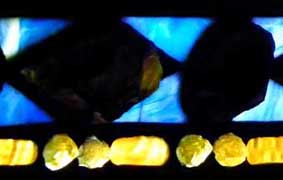
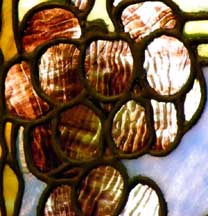
A small, compact chunk or clump. A lump, or irregularly shaped mass, A small, irregularly shaped "glob" of glass, flat on the bottom, rounded across the top. Nuggets are made by literally dropping a small amount of molten glass onto a flat surface. Frequently called "globs," they are often incorporated into leaded glass artwork. Often used to replace smaller round pieces in a design, such as grapes in a cluster, a flower center, or to add dimensional interest to a piece. Sizes range from 1/4" to up to 2" in diameter and come in a variety of cathedral (above) and opal (below) colors. Both John LaFarge and Louis Comfort Tiffany used irregular nuggets, chipped and fractured wih a hammer - usually calledjewels (above).
|
|||||||||||||||
| . | |||||||||||||||
|
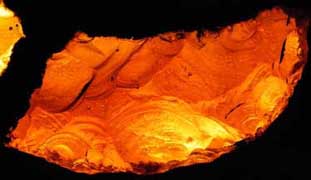
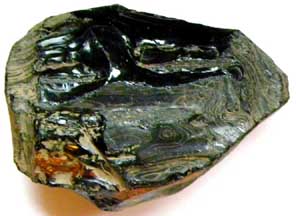
Most obsidian is 70 percent silica (sand) - just like modern factory-made stained glass used for windows. Obsidian can come in many different colors including dark green, dark brown, black, golden sheens, beautiful yellows, blues, and tinges of purple. Iron and magnesium typically give the obsidian a dark green to brown to black color. Obsidian can also come with small white inclusions made from cristobalite. These small white crystals look very similar to snowflakes and are called Snowflake Obsidian. Its splinters are often transparent (below) or translucent (below). It is a naturally occurring volcanic glass that was the first form of natural glass used by humans. In the Stone Age, it was fractured to produce sharp blades or arrowheads. Today, obsidian glass is used to make scalpel blades used in cardiac surgery. The obsidian used as the illustration was purchased from Past and Present.
|
|||||||||||||||
| . | |||||||||||||||
|
VS. Cathedral glass (above) |
|||||||||||||||
| . | |||||||||||||||
| Opaque
glass Neither reflecting nor emitting light; allowing little or no light to pass through. VS. translucent (below): letting only some light through, so that objects on the other side appear blurry. VS. transparent (below): able to be seen through with clarity |
|||||||||||||||
|
Basically 3 types:
Traditional ovens have been made of brick, often in beehive shape. Kiln: a furnace or oven used to bake pottery. Modern kilns can be fuelled by electricity or gas but traditionally wood was used. Illustration: Roycroft campus kiln
|
|||||||||||||||
| . | |||||||||||||||
|
|
|||||||||||||||
| . | |||||||||||||||
|
Depicting historical scenes that were scattered over a window ignoring the window support lines. See also Munich Pictorial Style Stained Glass Windows in Buffalo
|
|||||||||||||||
| . | |||||||||||||||
| Plating The layering of glass pieces directly on top of each other to achieve detailed depth and minimize the need for painting Sometimes glass is more than one layer thick, meaning another piece of glass may be mounted in front of, or behind another, which requires additional glass and modified construction techniques.
|
|||||||||||||||
| . | |||||||||||||||
| Pontil,
punty A solid metal rod used, tipped with a wad or ring of hot glass, to remove a blown object from the blowpipe in order to allow the top to be finished and any other final shaping to be done. Pontil mark When the glass has cooled and solidified it is knocked off the rod, leaving a rough mark, the 'pontil mark'. Refers to the place on the base of a glass object where it is attached to the punty rod or pontil while the blower is shaping and finishing the piece, and then snapped off and polished smooth. |
|||||||||||||||
| . | |||||||||||||||
|
Pot
metal glass ("Antique glass") Pot
metal
is glass that is of one solid color, no texture and
extremely opaque with no light transmitted. Two
examples are solid, dense white and black. In medieval
times, to lighten the color, flashing
was used.
The modern method of producing stained glass is by ladling molten glass onto a table and then into a roller. See the process in photos with captions: Kokomo Opalescent Glass: Tour the Factory
|
|||||||||||||||
| .. | |||||||||||||||
|
The illustrative series of small images or carvings which often decorate the base front of an altarpiece or stained glass window. Predella imagery tends to depict a narrative series such as tales from the bible. |
|||||||||||||||
| Queen
Anne window Small square lights around a clear center light |
|||||||||||||||
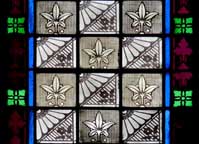
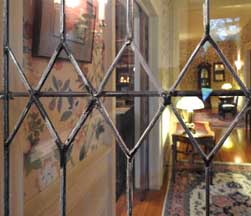
"Quarry windows were an extension of grisaille (above) windows and great favorites of fifteenth century England. The quarries were diamond shaped and individually decorated with small stained glass emblems which might include flowers, insects, leaves, and heraldic devices." - Nola Huse Tutag, Discovering Stained Glass in Detroit, Wayne State University Press, 1987, p.135 "During the
fifteenth and sixteenth centuries more use was made of
stained and painted glass in secular buildings. This
consisted in the main of square or diamond-shaped quarries
each painted with some device such as a bird, an animal, a
flower, or some heraldic charge. Against these quarry
backgrounds were sometimes placed heraldic shields, or
roundels, painted with matt and often silver stained
(below)... As the century progressed these quarries were
replaced by clear white glass, through which one could see
an undistorted image..." - English
Stained Glass, by John Baker. Harry N. Abrams,
1960, p. 227 Quarry windows sometimes include pictorial mandorlas or roundels (below) set against a background of quarries.
|
|||||||||||||||
| .. | |||||||||||||||
 Renaissance and Reformation |
|||||||||||||||
| . | |||||||||||||||
|
|
|||||||||||||||
| . | |||||||||||||||
| Rondel
(RON dle) A mouth-blown piece of glass that has been spun into a circular shape, often irregular. Sometimes incorporated into leaded glass artworks. The heavier center is called the "navel." To create a rondel, molten glass is taken from a furnace with a blowpipe (above). The molton glass is blown out into a small bubble. The small, still hot, ball of glass will now be attached to a pontil rod (above) and broken from the blowpipe, causing the characteristic "navel." By spinning the glass, a small rondel is formed. For more information, see "How Rondels Are Made." Machine-made facsimiles are common, called "pressed rondels." Includes bullseye glass. Not to be confused with roundel below. |
|||||||||||||||
| . | |||||||||||||||
|
|||||||||||||||
| . | |||||||||||||||
|
Roundel (pron. ROUN dle) Not to be confused with rondel (above). Single piece of colourless or non-pot-metal glass, either round, square, rectangular, or oval, that is painted with a self-contained design. Roundels are single
sheets
of glass, usually circular, that are painted with a
self-contained design, and which are often associated with
medieval glass from the Low countries. Roundels were commonly used in medieval homes and many of the designs provide glimpses of contemporary life and humour - including hybrid creatures and scenes from the agricultural year. "The silver stain
technique (below) was used until the
second half of the 16th century, when enamel-based paints (above)
provided a greater range of colors." - Gordon Campbell,
Grove Encyclopedia of Decorative Arts, Volume 1: Roundel,
stained-glass In the 17th century, roundels were set in windows composed of quarries (above). In the victorian era, birds were a favorite subject matter for roundels. Roundels and round medallions sometimes used interchangeably. Example: Metropolitan Museum of Art (online Sept. 2014) In heraldry, a roundel is any circular shape. See also: Grisaille above For more information, see Grove Encyclopedia of Decorative Arts, Volume 1: Roundel, stained-glass (online Sept. 2014)
|
|||||||||||||||
| . | |||||||||||||||
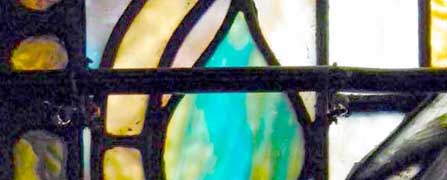 Saddle bars The round support bars on a stained glass window. They are attached to a stained glass panel with copper wire that has been soldered on to lead joints (where one piece of lead meets another) and then the ends are twisted firmly behind the bar to hold the panel in place. The flat support bars are called fins. They should be soldered directly to the stained glass panel at all possible lead joints. Both saddle bars and fins should be attached to the sash as well as the panel, otherwise, it's just a piece of metal attached to the window, not supporting it. Booklet available for purchase: Stained Glass Association of America, "Standards and Guidelines for the Preservation of Historic Stained Glass" |
|||||||||||||||
| . | |||||||||||||||
|
Silkscreen is an example of stencil technique.
|
|||||||||||||||
| . | |||||||||||||||
|
This where the term "stained glass" comes from. |
|||||||||||||||
| . | |||||||||||||||
| Slab glass See Faceted glass (above) |
|||||||||||||||
| . | |||||||||||||||
|
"As a material stained glass is glass that has been coloured by adding metallic salts during its manufacture. The coloured glass is crafted into stained glass windows in which small pieces of glass are arranged to form patterns or pictures, held together (traditionally) by strips of lead [came] and supported by a rigid frame. Painted details and yellow stain are often used to enhance the design. The term stained glass is also applied to windows in which the colours have been painted onto the glass and then fused to the glass in a kiln." - Wikipedia Silver stain where the term "stained glass" comes from. Process of designing and fabricating stained glass
See also: Answers.com: Stained glass |
|||||||||||||||
| . | |||||||||||||||
|
Staining
/ Silver staining In glassworking,
staining is the process of coloring the surface of glass by
the application of silver sulfide or silver chloride,
which is then fired
at a relatively low temperature. The silver imparts a
yellow, brownish yellow, or ruby-colored stain, which can be
painted, engraved,
or etched.
Subsequent stainings and firings can produce a deep orange.
Because of silver staining, yellow and green grew in
popularity at the expense of the old favorites, blue and
ruby. |
|||||||||||||||
| ... | |||||||||||||||
| Stenciling See Silk-screening (above) |
|||||||||||||||
| . | |||||||||||||||
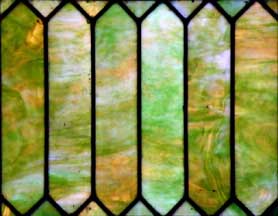
| Streakies Sheets of colors streaked across the surface. They are similar in this to opalescent (above) glass, but being transparent (below) they have a delicacy and imprcssiveness that can be breathtaking when the light streams through. Many of the English Strcakies, in addition to combining wide ranges and flow of colors, also add a rippling (above) of the glass itself - a textural component that makes the colors simply dance across the sheet. Streakies are particularly effective when used in windows as sunsets, cloud-filled skies, ocean waves, landscapcs, mountains, or rainbows. |
|||||||||||||||
| . | |||||||||||||||
|
|
|||||||||||||||
| . | |||||||||||||||
|
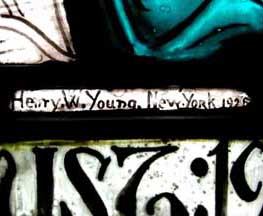
To be distinguished from stained glass suppliers (e.g., Kokomo above), although studios may work with suppliers to develop an original color, texture, etc. Studios (or designers in the studio) sometime sign their work.
Examples: |
|||||||||||||||
| . | |||||||||||||||
|
|
|||||||||||||||
| . | |||||||||||||||
|
Glass that allows only some light through, so that objects on the other side appear blurry. If you place your hand behind translucent glass, you can see its shadow but can't see any of the distinct features. Used in panels and windows. Almost always the primary glass used in lamps. Opalescent (above)
glass is translucent, |
|||||||||||||||
| . | |||||||||||||||
| Transparent
glass Glass that is see-through, clear; having the property that light passes through it almost undisturbed, such that one can see through it clearly; VS. translucent (above): Glass that allows only some light through, so that objects on the other side appear blurry. VS. opaque (above): Neither reflecting nor emitting light; allowing little or no light to pass through. |
|||||||||||||||
| Tulip
motif Populary used in Arts & Crafts buildings, especially in Bungalows |
|||||||||||||||
| Turtleback Molded glass tiles that are usually irregular in shape and thickness. The top is uneven. Multi-colored. Tiffany used turtlebacks in windows and lamp shades.
|
|||||||||||||||
| . | |||||||||||||||
|
Preparatory sketch in the stained glass making process. The client must approve the design, coloring, etc. before the next step is taken.
|