Illustrated Architecture Dictionary ..................... Illustrated FURNITURE Glossary
Illustrated Architecture Dictionary
.....................
Illustrated FURNITURE
Glossary
Tuscan Order
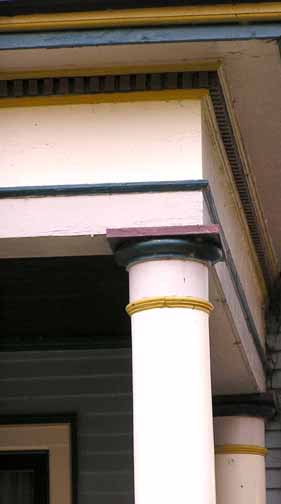
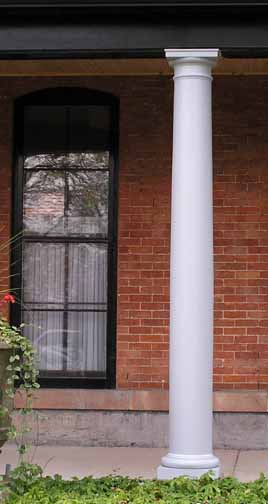
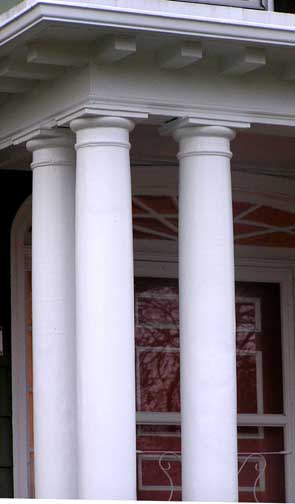
The Tuscan Order which is the simplest of all the orders, is distinguished by the following:
- Plain entablature
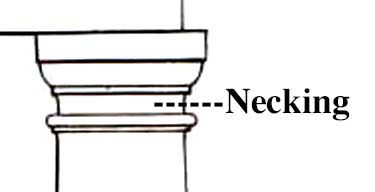
- A plain astragal (without bead-and-reel) ringed the column beneath its plain cap beneath the architrave
- Plain capital
- Unfluted column
- Unadorned base
Found on columns and pilasters
Popular in England and America during the Neoclassical Georgian and Georgian Revival periods.
The other four classical orders are Doric, Ionic, Corinthian and Composite
Found in derivatives of Classical Greek and Roman architecture, including Beaux Arts Classicism, Classical Revival, Federal, Georgian Revival, Greek Revival, Neoclassicism, Renaissance Revival, Second Empire
The Orders of classical architecture were formalized by the Greeks and applied to the design and proportion of buildings used the post-and-lintel, or column and entablature construction
The Doric Order emerged in the sixth century BC, and was followed by the Ionic Order in the east Greek territories of Anatolia. ...
The Doric Order of architecture was little used by the Romans in Italy. The Tuscan order was a simplified version with base, unfluted shaft and simply molded capital.
- British Museum Pattern Books: Roman Design, by Eva Wilson, 1999
From the perspective of these writers [Sebastiano Serlio and Andrea Palladio], the Tuscan order was an older primitive Italic architectural form, predating the Greek Doric and Ionic. They made a valid argument for this claim by reference to several historic examples still available to them at the time. However, there is a difference of opinion on the relative age of the Tuscan to this day.
In the Classical world, this strong order was considered most appropriate in military architecture and in docks and warehouses when they were dignified by architectural treatment.
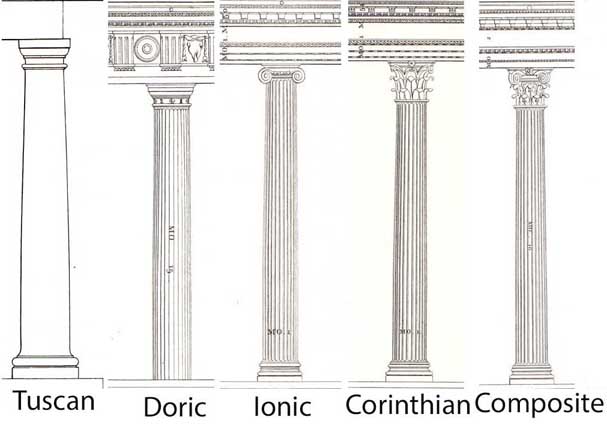
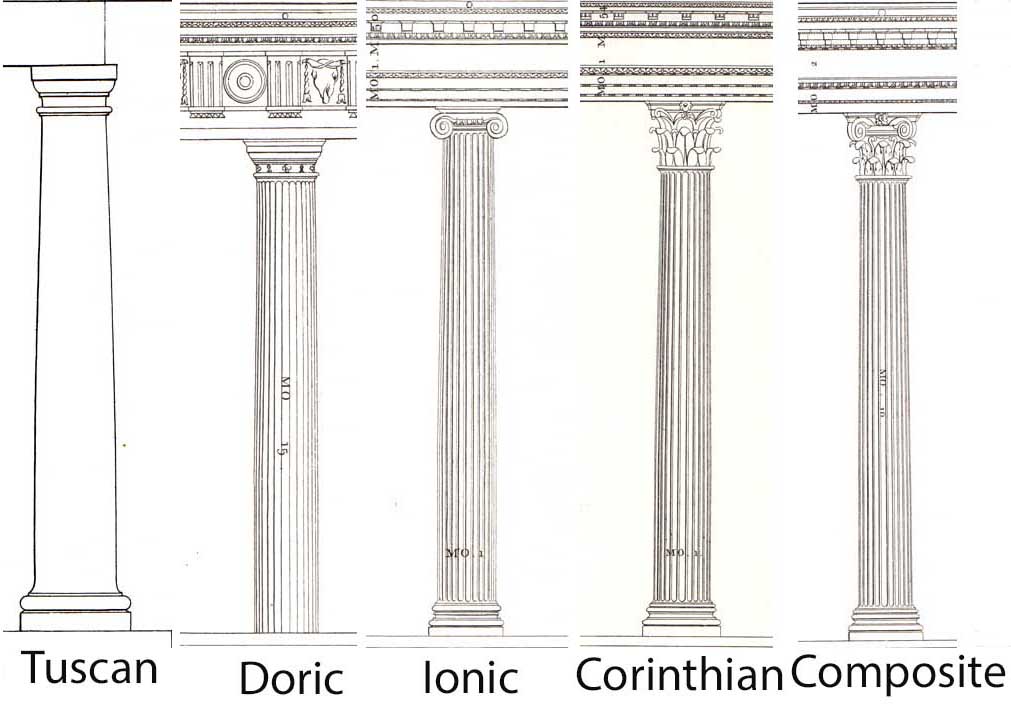
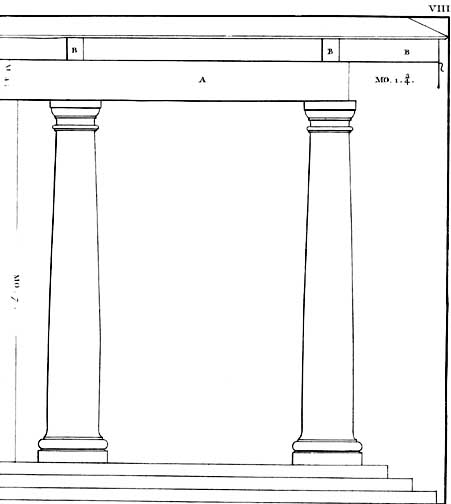
Palladio's Drawings of the Five Classical Orders
Click on drawing for larger size
Examples from Buffalo:
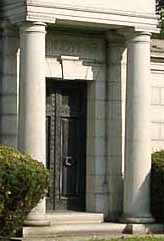
- Illustration above: Frank Goodyear Mausoleum
- 50 University Avenue
- Depew Mausoleum
- Automobile Club of Buffalo
- Charles W. Goodyear House
- Cemetery Tuscan column
- Knox House
- 24 Chapin Pkwy.
- 165 Chapin Pkwy.
- Campanile Apartments
- Our Lady of Victory Basilica
- Lackawanna Public Library
- 180 Linwood Avenue
- 232 Linwood Avenue
- 85 Depew Ave. - Example #1
- 85 Depew Ave. - Example #2
- 880 West Ferry St.
Other examples:
- Palazzo Chiericati, Vicenza Column
- 2 Drawings from Andrea Palladio's The Four Books of Architecture
- Coliseum, Rome, Italy
- Drawing from Andrea Palladio, The Four Books of Architecture (Dover Books, 1965)
- St. Michael's Episcopal Church, Charleston, South Carolina
- 45 Portland Place, London, England
- Hotel de Villes (City Hall), Nyon, Switzerland
- Choral Synagogue, Moscow, Russia