Illustrated
Egyptian Architecture Dictionary . .......................... Illustrated
Architecture Dictionary
Papyrus
 |
 |
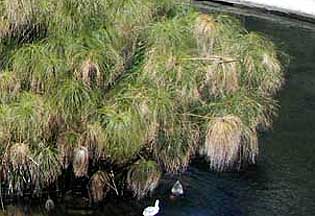
Triangular-stemmed reed, which grew about 13 ft. tall, flourished along the banks of the Nile, but vanished due to overharvesting for boats, baskets, sandals, rope, and writing material. Attempts are now being made to reintroduce it into Egypt.
Symbolized Lower Egypt. The intertwining of the lotus and papyrus was frequently used to represent a unified Egypt (see "Narmer")
One important symbolic aspect was based on the understanding of the temple as an image of the natural world as the Egyptians knew it. Lining the temple base are carvings of papyrus and lotus plants that seem to grow from water, symbolized by figures of the Nile god Hapy.
At about the same time as the ancient Egyptians moved from prehistory to history by developing a written language, they discovered the need for a medium other than stone to transcribe upon. They found this in their papyrus plant, a triangular reed which symbolized ancient lower Egypt.
Besides its use for producing a medium for writing purposes, papyrus was also used for mattresses on beds, for building chairs, tables, and other furniture as well as for mats, baskets, boxes, sandals, utensils, rope and boats. Furthermore, the papyrus root was a source of food, medicine and perfume.For more information, see Elaine A. Evans, Papyrus: A Blessing Upon Pharaoh
Examples:
- Left illustration: Papyrus plants, Catania, Sicily
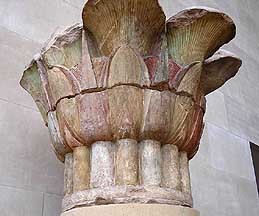
- Right illustration: Egyptian composite papyrus capital 2 rows of papyrus plants
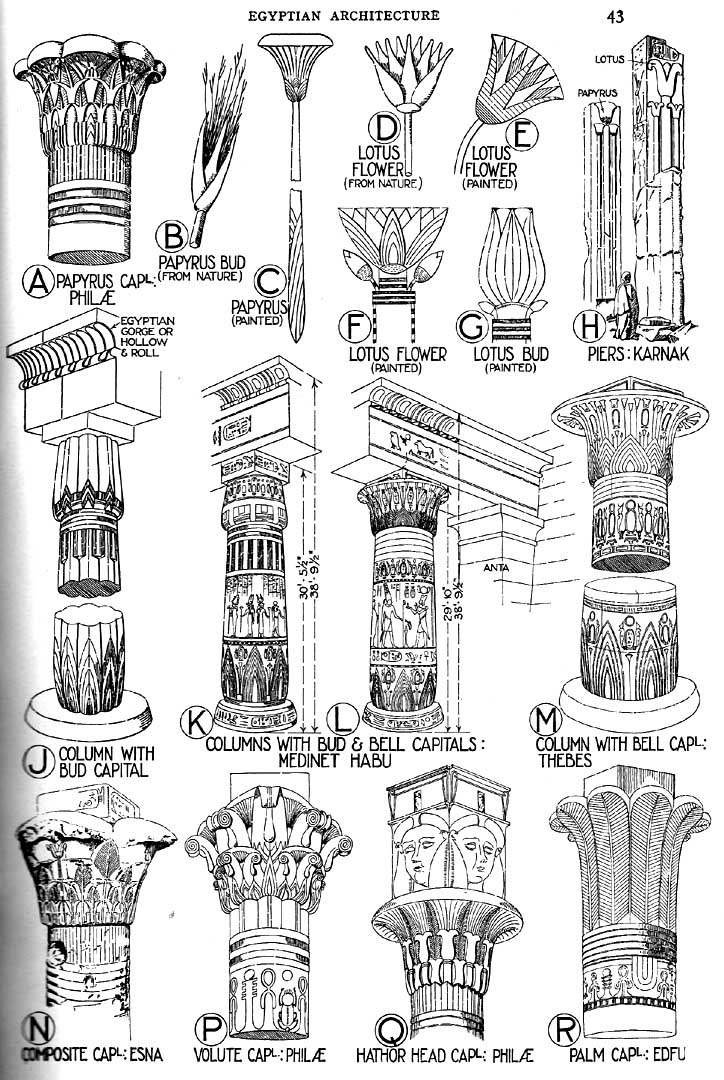
- 4 drawings A History of Architecture on the Comparative Method, by Sir Banister-Fletcher, New York, 1950, p. 43
- Row of papyrus stalks and lotus flowers - Temple of Dendura on display at the Metropolitan Museum of Art
- Row of papyrus stalks and lotus flowers - Kom Ombo Temple
- Egyptian columns and capitals
- See also: Metropolitan Museum of Art: Men splitting papyrus
- Papyrus paper Photos of the process