The Aerospace Industry in Buffalo, NY
The Aerospace
Industry in Buffalo,
NY
Glenn Curtiss
in Buffalo, NY
1911-1946 Time Line and
18 Photographs from the Niagara Aerospace Museum taken in 2002
Special thanks to the staff of the
Niagara Aerospace
Museum, especially Curator/Sr. Historian Richard Byron, for their
cooperation and
assistance in 2002.
Time Line below photos
|
|
|
|
|
|
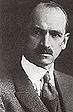
Glenn Curtiss |
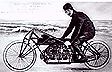
A Curtiss-built V8-engine motorcycle |
Churchill St. plant in Buffalo. |
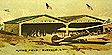
Flying Field, on Genesee St. in Cheektowaga |
|
|
|
|
|
|
Flying Boat hanger on Lake Erie |
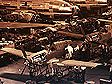
Metal parts plant |
Special parts plant |
|
|
|
|
|
|
|
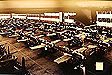
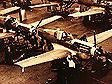
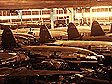
P40E in production on Genesee St. in Plant 2 |
P40E in production on Genesee St. in Plant 2 |
Churchill St. plant |
Churchill St. plant |
|
|
|
|
|
|
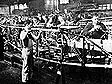
C-46 in production in 1942 on Genesee St. in Plant 2 |
C-46 in production in 1942 on Genesee St. in Plant 2 |
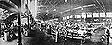
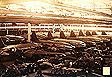
Production lines in 1942 on Genesee St. in Plant 2 |
Production lines in 1942 on Genesee St. in Plant 2 |
|
|
|
See photo of P-40 Hawks being assembled early 1940' s urtiss-Wright Plant (Genesee St) |
|
|
Transonic wind tunnel |
| 1911 | A leading early stunt flyer, Lincoln
Beachy, has been taught to to fly by Glenn Curtiss and
demonstrates his talent in June on the Niagara Frontier in a Curtiss
biplane. He roars off the field at the old Driving Park at East
Ferry and Humboldt Parkway, thrilling 20,000 enthusiasts at the Buffalo
Aviation Meet, then heads over for Niagara Falls where he wins a
$1000 prize for flying into the gorge, passing over the "Maid of the
Mist" boat and under the Honeymoon Bridge. (Driving Park is bounded by E. Ferry, Jefferson, Northland, and Humboldt Parkway. Later it will be named the Buffalo Fair Grounds, and then as the Hamlin Park neighborhood.) |
| 1915 | Glenn H.
Curtiss comes to Buffalo to build flying boats for Great Britain
(a $15 million order). He comes to Buffalo for a work force and plant
facilities. Curtiss rents the Thomas Flyer Automobile Manufacturing Plant on Niagara Street. This is where he develops the R-model airplane which will be the forerunner of the famous Curtiss "Jenny." Curtiss soon moves to a plant he builds on Churchill Street. He also rents several other facilities. |
| 1916 | The Curtiss Aeroplane and Motor
Company becomes the largest aircraft manufacturer in the world
during World War I and goes public in 1916 with Curtiss as president.
Curtiss employs 18,000 at its Buffalo facility and 3,000 at its
Hammondsport, New York location. They produce 10,000 aircraft during
World War I, more than 100 in a single week. The Curtiss "Jenny," America's most famous World War I airplane, is developed by combining the best features of the Curtiss "J" and "N" models. The JN-3 is modified in 1916 to improve its performance and redesignated the JN-4. With America's entry into WW1 on April 6, 1917, the Signal Corps began ordering large quantities of JN-4s, and by the time production is terminated after the Armistice, more than 6,000 have been delivered, the majority of them JN-4Ds. The Jenny is generally used for primary flight training, but some are equipped with machine guns and bomb racks for advanced training. After World War I, hundreds are sold on the civilian market. Jenny illustration (USAF Museum) |
| 1917 | Glenn Curtiss opens a 31-acre
factory at 2050 Elmwood Avenue in Buffalo. This is the world's
largest airplane plant. It closes at the end of the war (in 2002, it
houses the M. Wile Clothing Co. and Home Depot). At the close of World War 1, Curtiss will build four flying boats capable of trans-ocean flight. These boats will be the first NC series, and the NC-4, in 1919, will be the first airplane to successfully cross the Atlantic Ocean. |
| 1929 |
Curtiss and Wright interests are merged and the new Curtiss-Wright
Corporation moves to Buffalo, erecting a new factory (Plant 1) at
Kenmore and Vulcan Sts. in the town of Tonawanda (in 2002, the Western
Electric building) dedicated to building military aircraft.
These planes are flown at night from the parking lot to the Buffalo Airport in Cheektowaga to be flight tested. |
| 1930 | Lack of orders because of the
Depression forces the closing of the Churchill St. plant. The only
Buffalo-area Curtiss plant that continues operation after WW1 is the
Tonawanda plant. Glenn Curtiss dies in Buffalo, from complications after appendix surgery. |
| 1940 | The Curtiss-Wright plant employs 5,300 in 1940 and 43,000 three years later. |
| 1941 | Curtiss-Wright Corporation opens
Buffalo Plant 2 on Genesee Street in Cheektowaga (adjacent to
the airport). That huge plant will produce a total of 17, 575 planes of
which 113, 738 were P-40s and 2,674 were C-46s for U.S. involvement in
WW2 (1941-45). Before the American entry into the war, P-40s are exported to North Africa for the British Air Force (RAF). They are especially useful in desert fighting because of their reliable, large radiators. The P-40, developed from the P-36, is America's foremost fighter in service when WW2 began. P-40s engage Japanese aircraft during the attack on Pearl Harbor and the invasion of the Philippines in December 1941. They also are flown in China early in 1942 by the famed Flying Tigers and in North Africa in 1943 by the first AAF all-black unit, the 99th Fighter Squadron. |
| 1943 | Curtiss-Wright Corporation develops
a research laboratory across the road from the Buffalo airport. It has
a pioneer high velocity wind tunnel and a large altitude chamber. Dr.
Clifford C. Furnas is the first director. The laboratory will be donated to Cornell University after the war and named Cornell Aeronautical Laboratory (later Calspan). Cornell invents in-flight simulators, specially modified aircraft that can be programmed to feel like other aircraft that may not even exist. Wind tunnels are developed to test scale model planes in development. There are over 40,000 people (a strong percentage being women) working at Curtiss-Wright. |
| 1945 | By September 1945 the 40,000 people working at Curtiss-Wright has been reduced to 5,500 and the ripple is felt throughout the whole economy. By Christmas,1946 there are over 80,000 people, close to fifteen percent of the area work force, without work. |
| 1946 | In early 1946, after the war,
Curtiss-Wright announces that it is closing almost all of its Buffalo
operations. They are moving to Columbus, Ohio. The company claims it
has nothing against Buffalo itself. It is simply a matter of space; the
company doesn't need as much of it any more. The Tonawanda Plant 1 is sold to Western Electric and Plant 2 on Genesee St. to Westinghouse. |
Sources of text:
- Niagara Aerospace Museum displays. Online 2002
- John Percy, "Aviation History on the Niagara Frontier" pub. in Summer 2000 edition of "Western New York Heritage" magazine
- Interview with Niagara Aerospace Museum Curator/Sr. Historian Richard Byron
- Interview with Carl Zoschke, former Bell Aircraft publication handbook employee