Roman
architecture - Table of Contents .............Architecture Around the World
Curia Julia (Senate House)
Roman Forum, Rome, Italy
2002 photos
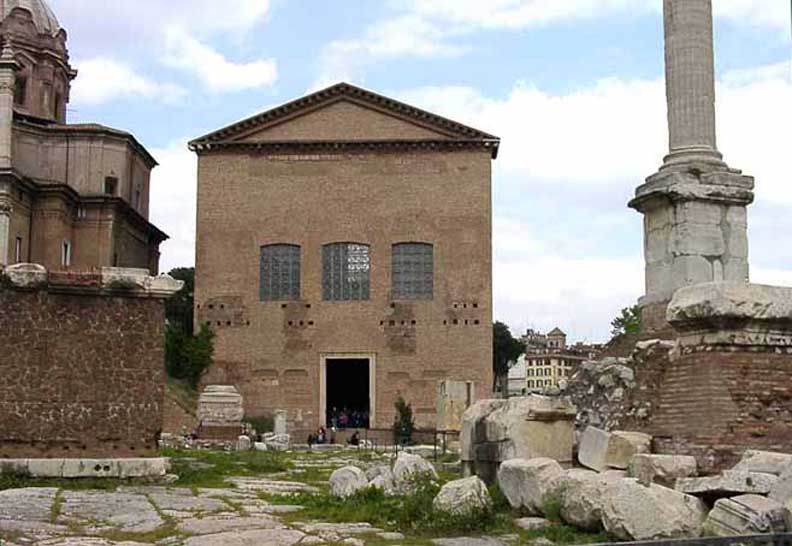 The domed building to the left is the church of SS. Luca e Martina. ... In the foreground is the end of the Sacra Via in the Roman Forum. ... Curia (center): Originally, the lower part of the front wall was decorated with slabs of marble.The upper part was covered with stucco in imitation of white marble. ... Augustus also built a portico, called the Chalcidicum, in front of the facade. The lines of holes in the facade are from the roof of the portico. 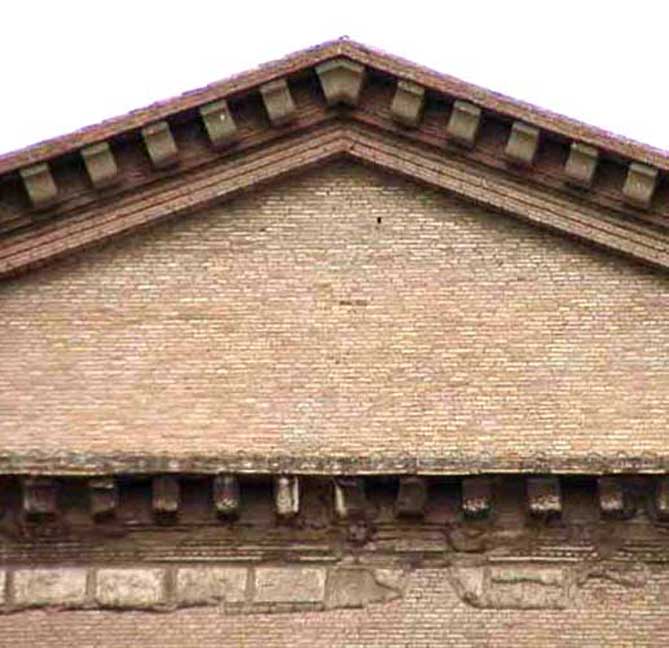 Modillions support the overhanging cornice in the triangular pediment 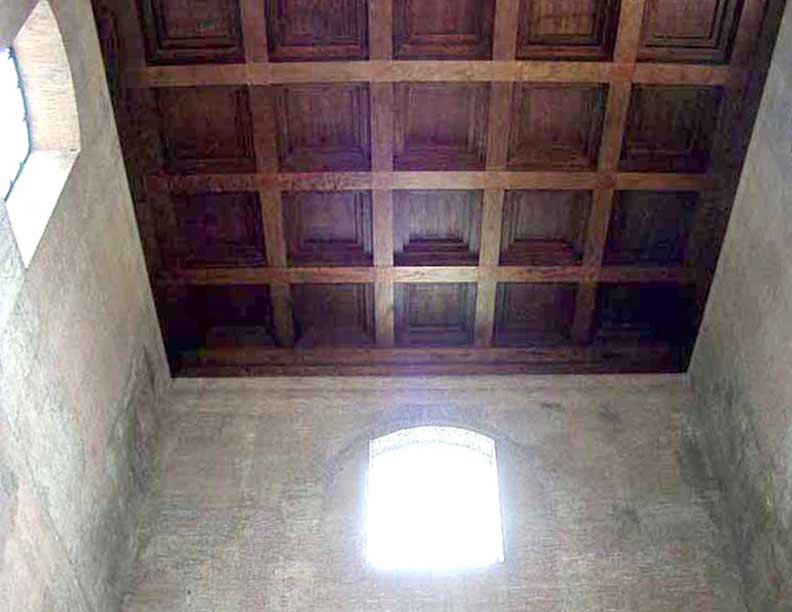 Coffered wood ceiling ... Clerestory window 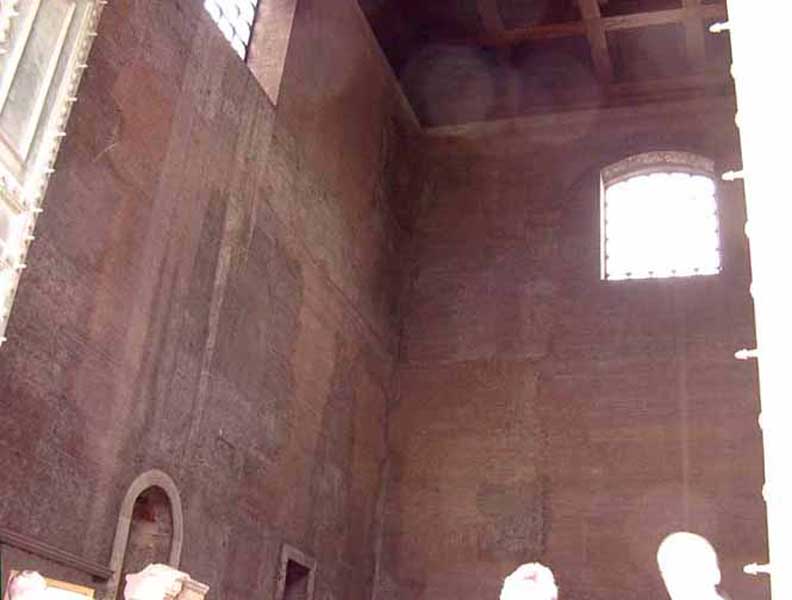 Note rounded arches and clearstory windows 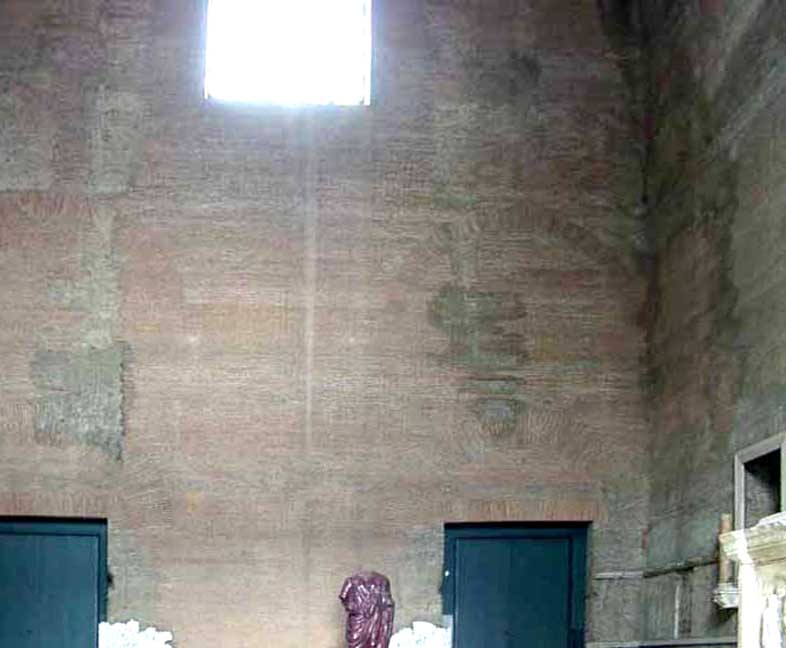 Clearstory window 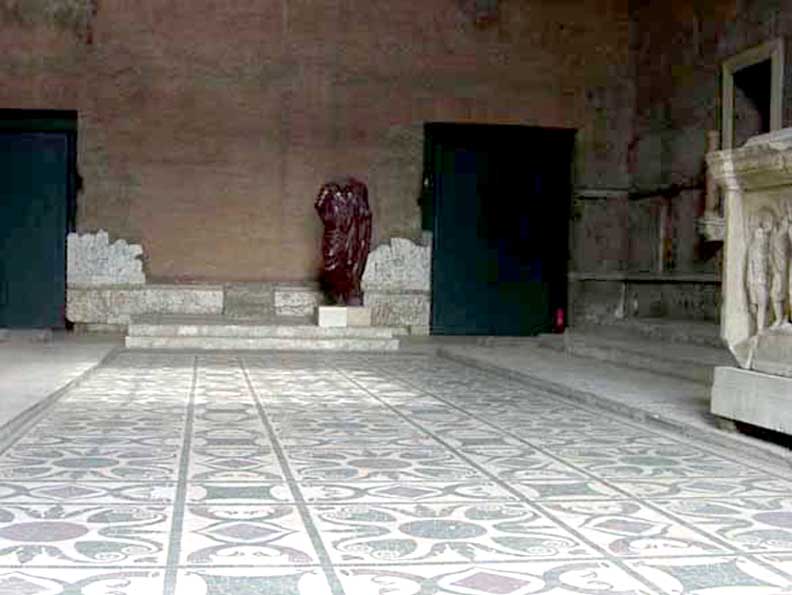 At far sides: one or two of three broad steps that could have fitted five rows of chairs - three hundred seats, enough for half of the senators. ... In the back of the hall there were seats for the consuls and the emperor. ... A main feature of the Curia's interior, the floor, is in contrast to the colorless interior of the Curia Julia. Featured on the floor is the Roman art technique of "opus sectile," in which materials are cut and inlaid into walls and floors in order to make pictures of patterns. 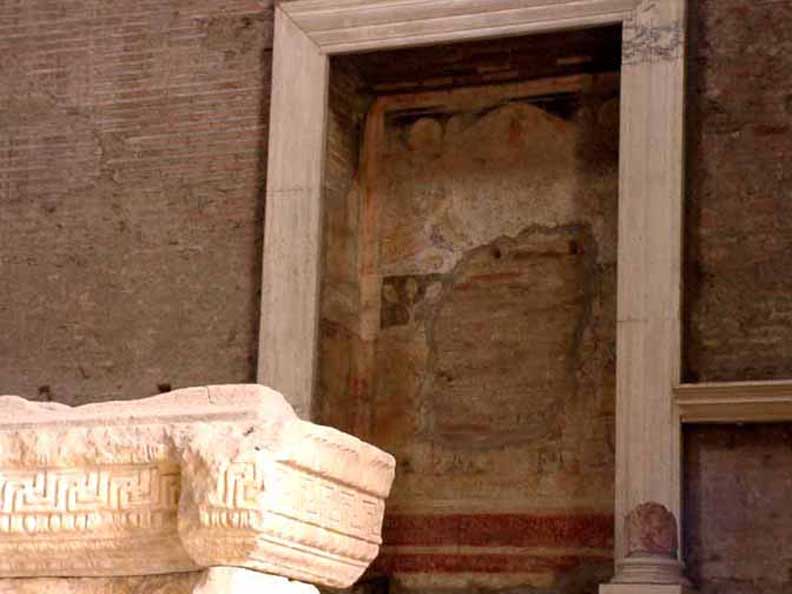 The building, wonderfully preserved, owes this to the conversion into the Church of Sant'Adriano in the 7th century CE. The remains of byzantine wall paintings are from this period ... Pictured is the top of one of two Plutei of Trajan huge marble reliefs, dating from the time of Trajan. They used to stand outside the, in the main square of the Forum. ... The reliefs are from an unidentified monument in the main square of the Forum, where they were found in 1872. 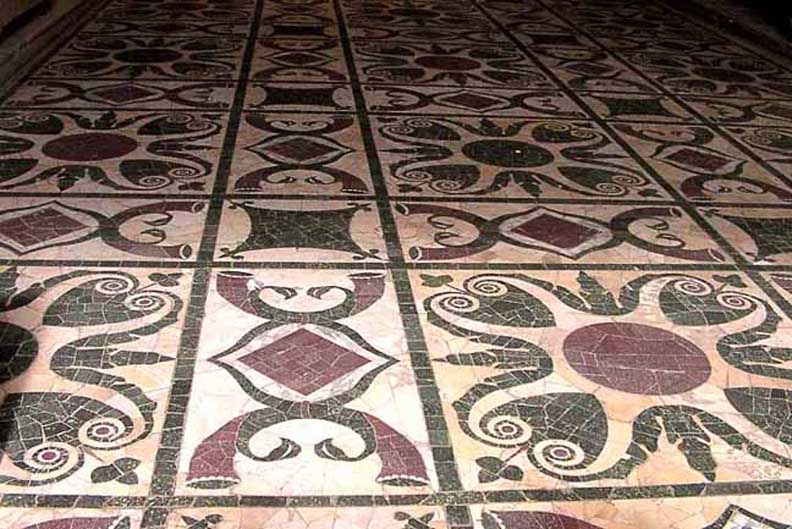 A main feature of the Curia's interior, the floor, is in contrast to the colorless interior of the Curia Julia. Featured on the floor is the Roman art technique of "opus sectile," in which materials are cut and inlaid into walls and floors in order to make pictures of patterns. ... Cf., Tiffany opus sectile glass |
| Curia Julia was the new senate house begun by
Julius Caesar in 44 B.C. just before his assassination and continued by
the next triumvirs. It was completed and dedicated in 29 B.C. by
Augustus. Like its predecessor, the curia Hostilia, and the curia
Pompeia, it was inaugurated as a temple. Augustus also built a portico, called the Chalcidicum,
in front of the facade. The lines of holes in the facade are from the
roof of the portico.
Domitian restored the curia in 94 A.D. The curia burned down in the fire of Carinus and rebuilt by Diocletian (Emperor from 284 to 305). and the existing building dates from his time. The building is of brick, originally clad with marble on the lower half and stucco on the upper half. The original roof was flat; the current is modern. A flight of steps led up to the entrance door. Over the door are three large windows. Interior The interior of the Curia Julia is fairly austere. There are three broad steps that could have fitted five rows of chairs, or a total of about three hundred senators. The walls are stripped, but originally were veneered in marble two-thirds of the way up. In the back of the room, between two doors, was the podium of the president of the senate. At one side of this is the base of the statue of Victoria, donated by Augustus and traditionally kept in the Curia. The marble floor is from the time of Diocletian. The Curia Julia is one of only a handful of Roman structures to survive to the modern day intact. The building, wonderfully preserved, owes this to the conversion into the Church of Sant'Adriano in the 7th century CE. The remains of Byzantine wall paintings are from this period. The church was demolished in the 1930s and the building restored to its 4th century appearance. See also the doors from the Curia Julia, now in the Basilica of St. John Lateran. (Online Dec. 2012) |