“Charles
Rohlfs” in the
Museum of the American Arts and Crafts Movement
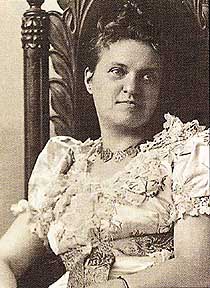
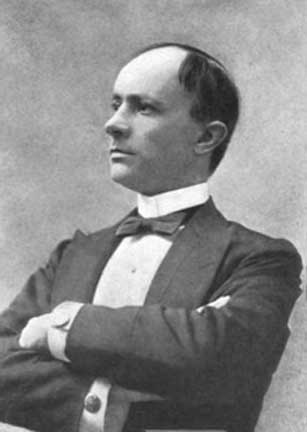
Charles
Rohlfs and Anna
Katharine Green
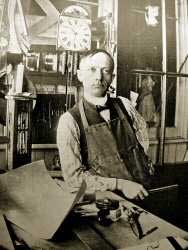 Charles Rohlfs 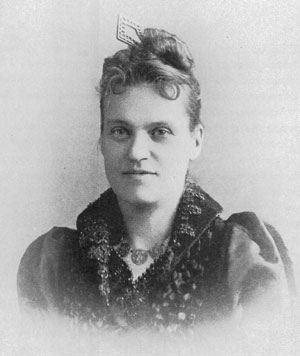 Rohlfs was perhaps eclipsed by his famous wife, detective novelist Anna Katharine Green. |
| HOUSE
- 2002 Photos 156 Park Street, Buffalo, NY Built: 1912 Architects: Colson and Hudson 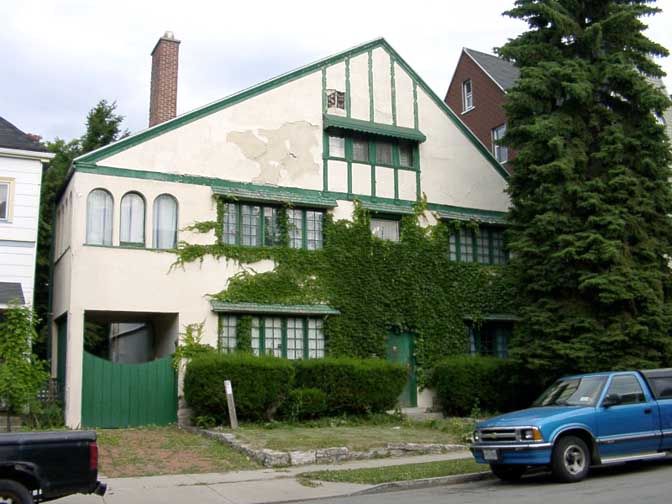 Arts & Crafts style ... Details below: 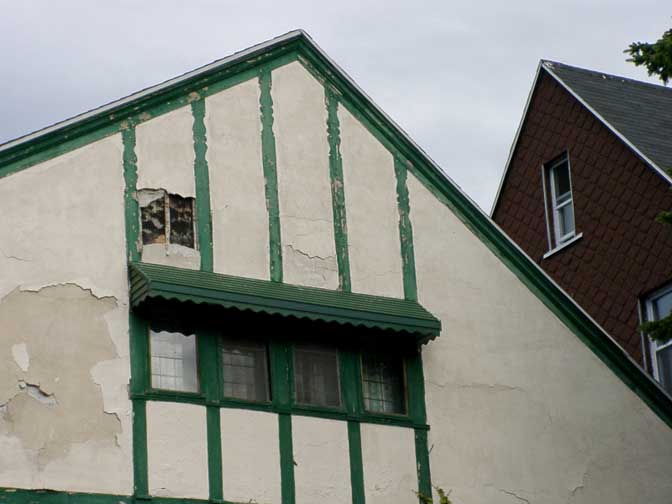 Gable roof ... Shed roof over ribbon windows 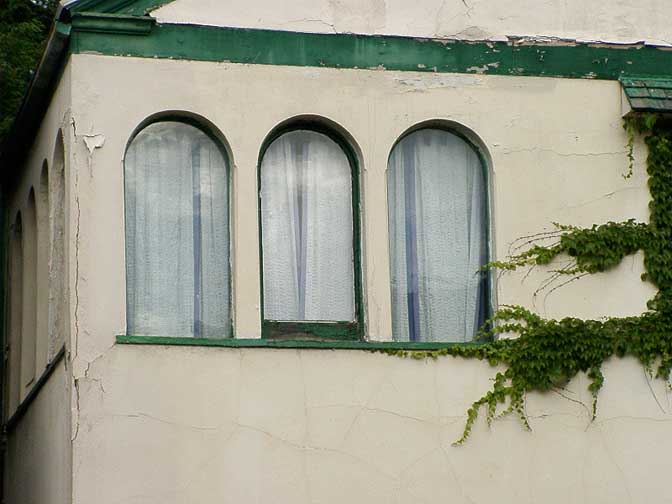 Are these windows (not Arts & Crafts) original? 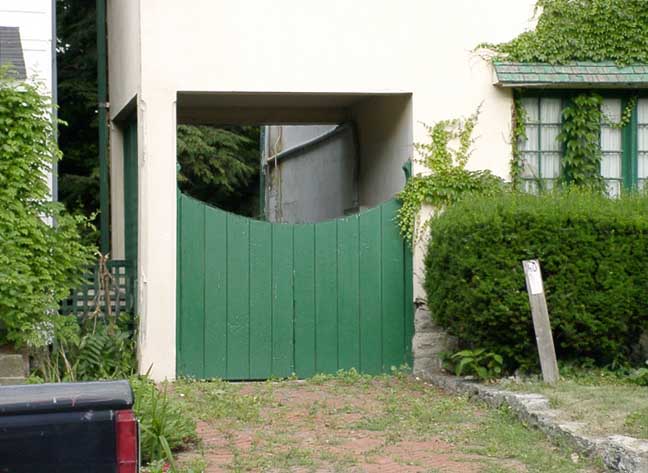 Is this carport original/ 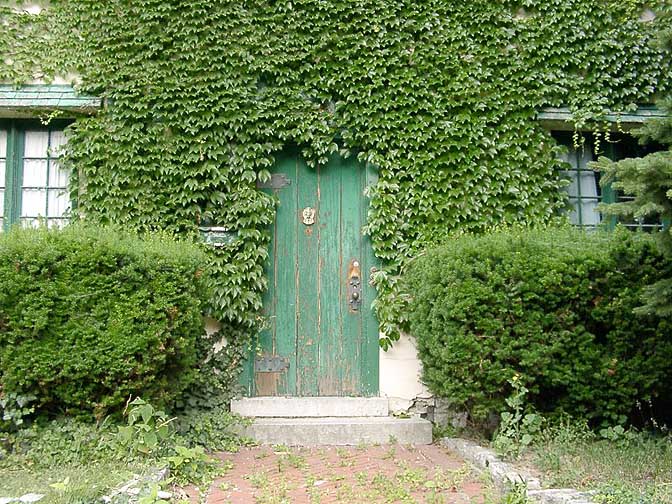 Arts & Crafts plank door 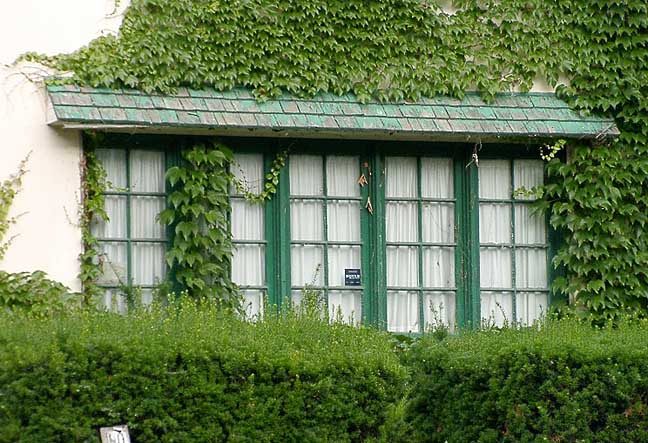 Arts & Crafts shingle shed roof |
Rohlfs
Memorial in Forest Lawn, Buffalo, NY, Section 27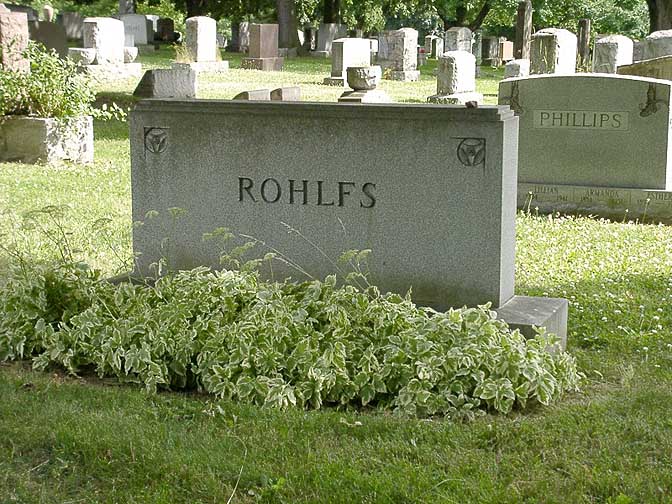 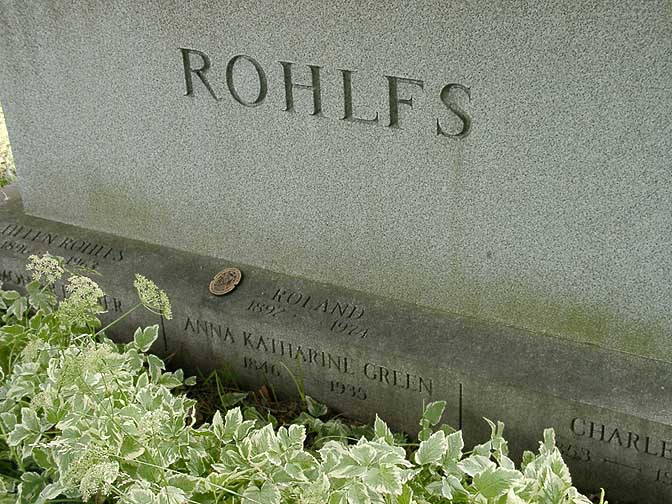 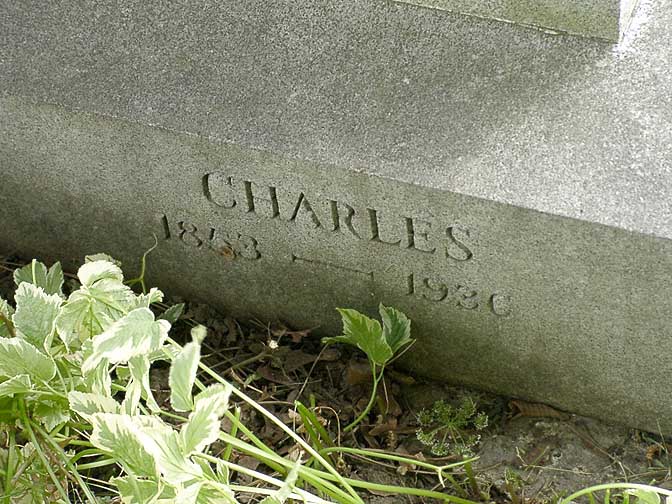 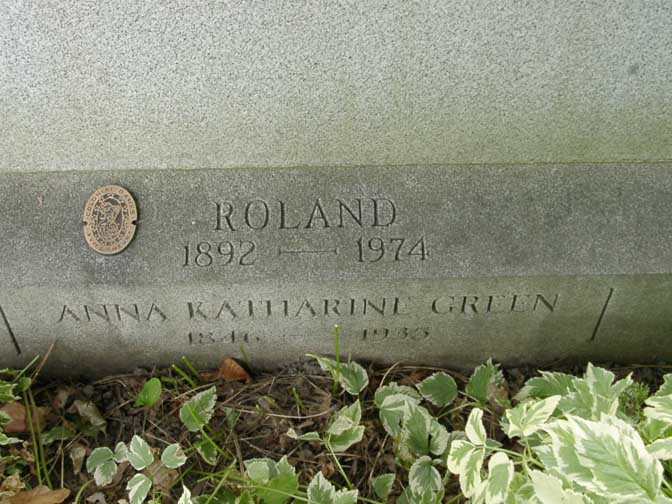 |
Charles Rohlfs
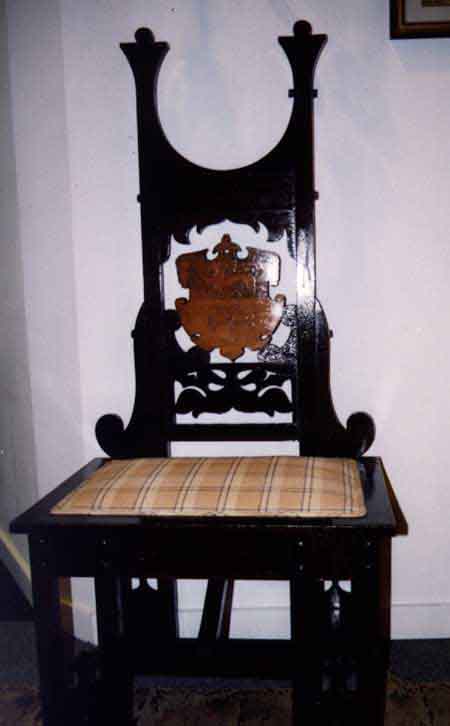
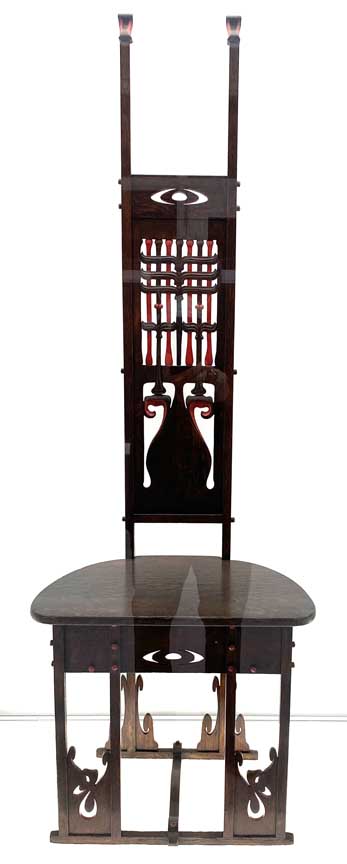
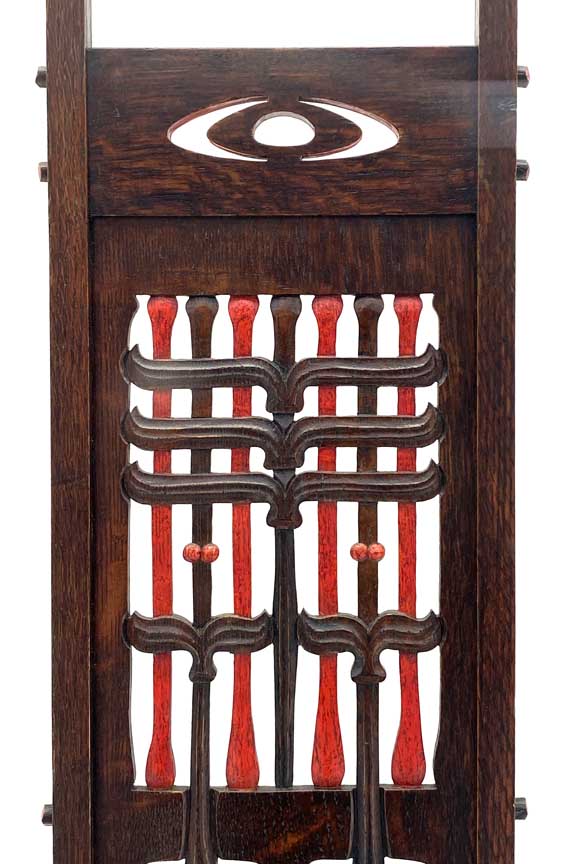
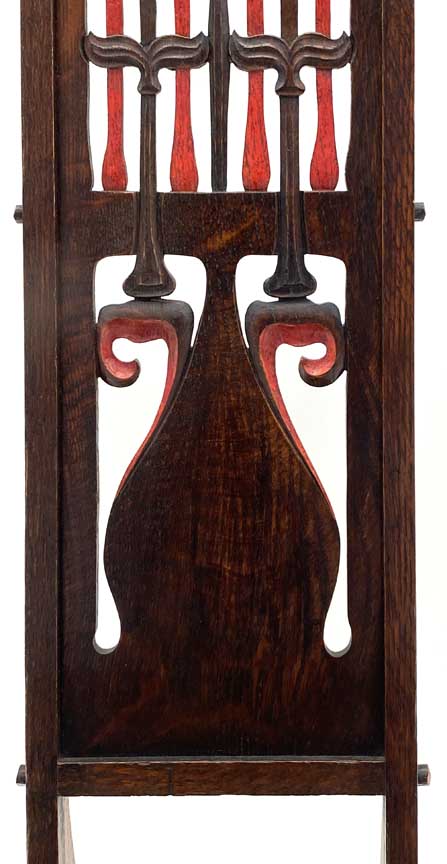
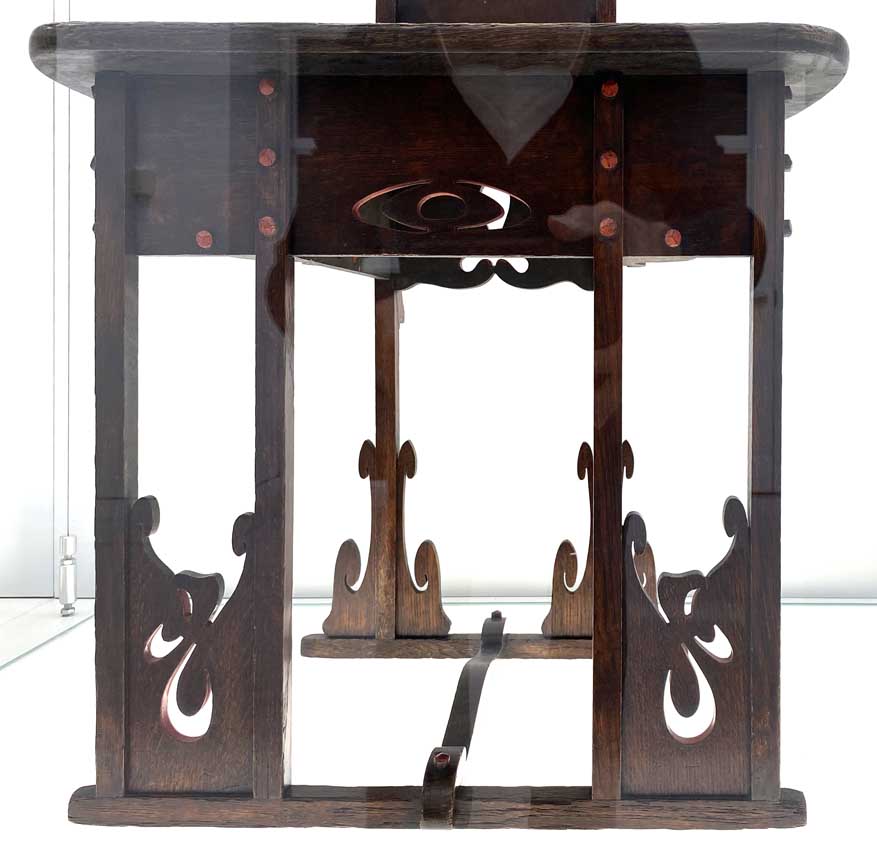
Charles Rohlfs (1853-1936) was one of the American Arts & Crafts Movement's most creative artists/craftsmen. He strayed from the simple lines that Gustav Stickley so religiously used, instead employing a style rich in carvings and wonderful ornament from both other cultures and other styles, including Chinese, medieval and Art Nouveau.
Rohlfs was tall with a commanding voice and made his stage debut as an actor in Boston in 1868. In 1884, he married Anna Katharine Green, who became one of America's most successful detective fiction writers. Green's father was 75 and as a condition of the marriage required that Rohlfs give up his acting career. Rohlfs returned to a craft he had learned while attending Cooper Union, the design and crafting of iron stoves.
The Rohlfs moved to Buffalo in 1888 and lived at 26 Highland Avenue. They decided to stay in Buffalo and bought property at 156 Park Street and build a Craftsman style home designed by Rohlfs who also designed the furniture in a style related to the later Mission Style. Rohlfs was now actively engaged in his career as a furniture designer and established a studio.
He opened his first commercial workshops (and a furniture company in Buffalo) in 1898, and the Marshall Field's Department Store held an exhibition of his work in 1900. His furniture was well received world wide. After an exhibition in Turin in 1902 Rohlfs was made a fellow of the Royal Society of Arts in London and commissioned to provide a set of chairs for Buckingham Palace.
Despite the highly decorative nature of his furniture, Rohlfs's work is still considered part of the Arts & Crafts movement due to his highly-individualistic, sophisticated design vocabulary as well as his use of quarter sawn white oak, fully-expressed joinery and relatively direct approach to forms.
In the midst of their mutual successes over the next several years - Green's flurry of publishing and Rohlfs's achievements in acting and industrial design - on July 29, 1887, the couple and their children (twenty-three-month-old Rosamond and newborn Sterling) moved upstate to Buffalo.
Rohlfs's work in industrial design had yielded him a number of patents for stove designs and a job offer in the "Queen City of the Great Lakes " from Sherman S. Jewett and Company. Buffalo was to be their home for the next forty- five years. Here they continued earlier efforts to design and make furniture for themselves that was appropriate to their artistic taste.
- Joseph Cunningham, "Anna Katherine Green and Charles Rohlfs: Artistic Collborators," in The Magazine Antiques, December 2008, p. 70
Charles Rohlfs and Gustav Stickley
Rohlfs distanced himself not just from Stickley, but from any design movement whatsoever, preferring to think of his creations as "artistic" furniture.
When lecturing at Chautauqua, New York, in 1902 about the burgeoning American arts and crafts movement, Rohlfs specifically impugned what he thought of as merely commercial enterprises, such as Stickley's, the Roycrofters in East Aurora, L. and J. G. Stickley, and Charles P. Limbert.
Stickley, on the other hand, sought to build a brand name and successful business by publicly ignoring his most direct competition. For example, while he and Rohlfs exhibited across the aisle from one another at the Pan-American Exposition in Buffalo in 1901, and Stickley published a picture of his booth with Rohlfs's installation visible in the background in the second issue of his Craftsman magazine, he neither acknowledged Rohlfs's participation in the exhibition, nor covered Rohlfs's work in any way in the magazine....
Rohlfs's earliest known furniture predates Stickley's first arts and crafts experiments by more than a decade....
Although determined competitors, Charles Rohlfs and Gustav Stickley on some level must have admired and respected one another's contributions to furniture design... each learned from the other in what might be called a conversation of western New York furniture makers.
Stickley was clearly inspired by Rohlfs's designs and benefited from his sense of lightness, elegance, and sophistication, while forging his own vision of austere beauty adapted to repeated production.
Rohlfs's style featured exquisite carving, subtlety of line and form, and boundless creativity, but he learned some lessons in proportion, construction, and design unity from Stickley.
- Joseph Cunningham, "Conversation in Western New York: Charles Rohlfs and Gustav Stickley," The Magazine Antiques, May 2008, pp. 120-129
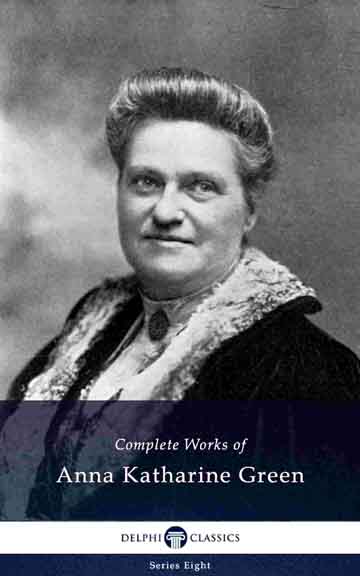
Anna Katharine "Kitty" (Rohlfs) Green
By Patrick Kavanagh
History of Women in Forest Lawn Lawn Cemetery
Section 27, Lot 732
Date of Death: 4/11/1935
(lst Female Detective Novelist)Ms. Green was born in Brooklyn, NY, on November 11, 1845, to James Wilson Green, a prominent attorney and Catherine Ann Whitney Green. Her mother died when Katharine was three months old. Her father remarried Grace Hollister of Buffalo. The family then moved to Buffalo. Anna attended Ripley Female College in Poultney, Vermont, receiving a B.A. degree in 1866.
In 1884, Ms. Green (age 38) married Charles Rohlfs. Mr. Rohlfs was an actor and later became a furniture designer noted for his "mission and Rohlfs" furniture style. (This was along the same line as the Roycrofters). Some of his work appears in Buckingham Palace.
Ms. Green was one of the first American women to write detective novels. During her 45 year career, she wrote 35 novels. Her first novel, The Leavenworth Case, was phenomenally successful, selling half a million copies. She believed that the essentials of a good detective story were a tightly constructed plot with a unique turn of events, a step-by-step revelation of the story line and a climax that did not disappoint the reader.
Ms. Green created the first female detective, Amelia Butterworth, She also wrote 23 short stories, and a volume of poetry. She was known for ingenious touches that made her books inventive and interesting. In both America and England, she was considered one of the best writers of detective fiction. Her fans included President Theodore Roosevelt and Woodrow Wilson, as well as such English masters of mystery as Sir Arthur Conan Doyle. In 1912 she and her husband resided at 156 Park St. in the Allentown district of Buffalo. Anna died on April 11, 1935 at the age of 88.See also; IMDb: Anna Katharine Green for movie information
Reprint
A Buffalo Power Couple
By Cheryl McDonald
"Explore Buffalo Newsletter," September 2020
At the turn of the 20th century Buffalo was one of the largest cities in the country and home to many successful businessmen. Men, such as Seymour Knox and Charles and Frank Goodyear, married strong, intelligent women who were active in local charities, served on boards of non-profits, and raised funds for Children’s Hospital, Red Cross, and other charitable organizations. But as respected and accomplished as these women were (Mrs. Stephen Clement was a classically trained pianist), they were not considered half of a power couple. However, there was a husband and wife in Buffalo at that time who today we would consider a power couple.
In 1884, Anna Katharine Green, 39 years old and a distinguished author of several novels including the best seller The Leavenworth Case, and Charles Rohlfs, a 31-year-old actor, desired to be married. However, Anna’s father, attorney James Wilson Green, would not have it. Even though Anna was a successful author, financially independent and 39 years old, the marriage was not to be unless Charles quit the theater and took up an occupation approved by James Wilson Green. So, the actor Charles Rohlfs became stove designer and cabinet maker Charles Rohlfs. The wedding then took place November 25, 1884 at the South Congregational Church, in Brooklyn New York with Rev. Dr. Lyman officiating. The guests included many who were prominent in literary and artistic circles, as well as judges, attorneys, and doctors.
Anna Katherine Green, who always referred to herself as Mrs. Rohlfs in her personal life, continued with her writing career after their marriage, published 39 novels and became known as the Mother of the Detective Novel. Her first successful novel, The Leavenworth Case, was made into a movie and Yale Law School once used her books to demonstrate how damaging it can be to rely on circumstantial evidence.
The Leavenworth Case even sparked a debate in the Pennsylvania State Senate over whether the book could really have been written by a woman, stating “the story was manifestly beyond a woman’s powers.”
By 1890 the couple were living in Buffalo NY with their two children, Rosamond and Sterling, soon to be joined by a third child, Roland. When they moved to Buffalo Charles could not find furniture to his liking, so he started creating his own. The family home at 105 Norwood was filled to the brim with his creations. Neighbors and guests started asking him to create furniture for them, and so his furniture designing career began, often in collaboration with his wife, Anna. He would go on to become a leader in modernist design right along with Frank Lloyd Wright and Gustav Stickley. Although his furniture related to the simple form typical of the Arts and Crafts movement, Rohlfs saw himself as an artist and he preferred the terms "artistic furniture" or "the Rohlfs style," to differentiate his work from the mainstream Arts and Crafts movement.
The exhibition of his furniture at the Pan-American Exposition in 1901 led to international recognition, which resulted in an invitation to the 1902 Exposition of International Design in Turin, Italy, where he was the only American woodworker to be featured. The success at Turin led to him being inducted into the Royal Society of Arts in London. A set of Rohlfs designed chairs are in Buckingham Palace today.
Charles Rohlfs career as a furniture designer was short-lived, however, and within ten years of living in Buffalo he had turned his energies to civic matters, including being elected as president of Central Council Businessmen’s Association and President of the Chamber of Commerce. He was often a featured speaker at political, social, and school events in the city.
Today many of Rohlfs pieces are in museums like the Strong Memorial Museum of Rochester or the Metropolitan Museum of Art in New York City.
Also by Cheryl McDonald:
Fanny Goodyear: The Buffalo Princess
Buffalo's Elite 54